
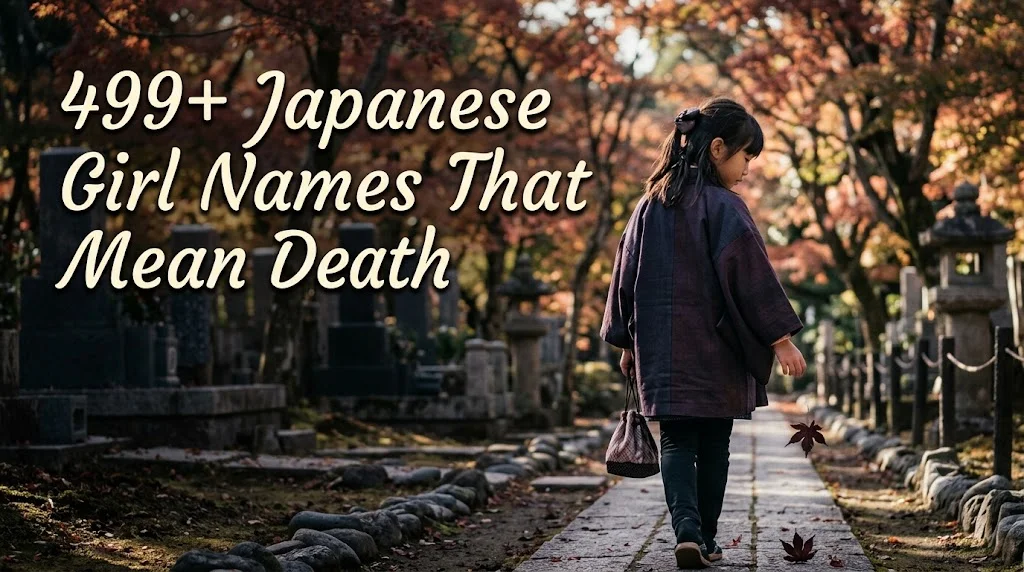
Choosing Japanese Girl Names That Mean Death can be meaningful for writers, gamers, anime fans, and parents who love deep symbolism. In Japanese culture, names often reflect emotions, nature, seasons, and spiritual beliefs rather than having a direct meaning of death. This guide explores beautiful, mysterious, and unique names inspired by darkness, endings, spirits, and folklore while respecting their cultural background and historical significance.
Fun Facts About Japanese Girl Names That Mean Death
Japanese names rarely translate directly to “death.” Instead, many names are connected to ideas like the moon, fading flowers, winter, shadows, spirits, or the afterlife. Their meanings depend on the kanji characters used, allowing one pronunciation to have several meanings. This makes Japanese names rich in symbolism, poetic beauty, and storytelling, making them especially popular in anime, fantasy novels, and video games.
Quick Checklist Before Choosing Japanese Girl Names That Mean Death
Before choosing Japanese Girl Names That Mean Death, it is important to understand that most Japanese names do not literally mean death. Instead, they often represent ideas connected to mystery, endings, darkness, spirits, fading beauty, winter, or rebirth. The meaning of a Japanese name depends greatly on the kanji characters used, so the same pronunciation can have several different interpretations. Researching the cultural background helps you choose a name that is respectful and meaningful.
If you are selecting a name for a baby, story character, anime role, game avatar, or fantasy novel, think about the personality you want the name to reflect. Some names sound elegant and poetic, while others feel dark, mysterious, or powerful. A well-chosen Japanese name should match the character’s identity, theme, and setting. Looking at the meaning, pronunciation, history, and symbolism will help you find a name that feels authentic and memorable while respecting Japanese naming traditions.
Japanese Girl Names That Mean Death Checklist
| Name | Meaning | Origin |
|---|---|---|
| Shiori (栞) | Guiding marker, often used symbolically | Japanese |
| Yomi (黄泉) | Underworld | Japanese Mythology |
| Shizuka (静香) | Quiet fragrance | Japanese |
| Rei (零 / 麗) | Spirit, graceful, or zero (depends on kanji) | Japanese |
| Kurumi (胡桃) | Walnut, symbol of endurance | Japanese |
| Ayame (菖蒲) | Iris flower | Japanese |
| Kage (影) | Shadow | Japanese |
| Tsukiko (月子) | Moon child | Japanese |
| Yoru (夜) | Night | Japanese |
| Rin (凛) | Dignified, cold | Japanese |
| Fuyuka (冬花) | Winter flower | Japanese |
| Sayo (小夜) | Little night | Japanese |
| Homura (焔) | Flame | Japanese |
| Hotaru (蛍) | Firefly | Japanese |
| Suzume (雀) | Sparrow | Japanese |
| Kuroha (黒葉) | Black leaf | Japanese |
| Nozomi (望) | Hope | Japanese |
| Akane (茜) | Deep red dye | Japanese |
| Mizuki (瑞希) | Beautiful moon, hope | Japanese |
| Hisoka (密) | Secret, hidden | Japanese |
Dark & Mysterious Japanese Girl Names
Dark and mysterious Japanese girl names often carry meanings linked to shadows, the night sky, the moon, forgotten places, silence, or spiritual folklore instead of directly referring to death. Their beauty comes from symbolism, making them popular for anime characters, fantasy stories, role-playing games, and gothic-inspired writing. Many of these names sound graceful while creating an unforgettable impression through their hidden meanings and elegant pronunciation.
When choosing a dark Japanese name, pay attention to both the pronunciation and the kanji used. A single name may have several meanings depending on the characters selected, making it flexible for different personalities and themes. Some names suggest mystery and quiet strength, while others evoke images of darkness, solitude, or ancient legends. These names balance beauty with depth, making them perfect for anyone looking for a unique, meaningful, and memorable Japanese girl name inspired by mystery and the unknown.
Dark & Mysterious Japanese Girl Names
| Name | Meaning | Origin |
|---|---|---|
| Yoru (夜) | Night | Japanese |
| Kage (影) | Shadow | Japanese |
| Kurayami (暗闇) | Darkness | Japanese |
| Yami (闇) | Dark, darkness | Japanese |
| Tsukiko (月子) | Moon child | Japanese |
| Sayo (小夜) | Little night | Japanese |
| Hisoka (密) | Secret, hidden | Japanese |
| Reika (麗華) | Beautiful spirit | Japanese |
| Kuroha (黒葉) | Black leaf | Japanese |
| Fuyumi (冬美) | Beautiful winter | Japanese |
| Shion (紫苑) | Aster flower, remembrance | Japanese |
| Rin (凛) | Cold, dignified | Japanese |
| Yuzuki (夕月) | Evening moon | Japanese |
| Akatsuki (暁) | Dawn, twilight | Japanese |
| Mayoi (迷い) | Lost, wandering | Japanese |
| Kuroe (黒江) | Black inlet | Japanese |
| Mikage (御影) | Honorable shadow | Japanese |
| Suzune (鈴音) | Bell sound | Japanese |
| Kanade (奏) | Melody, harmony | Japanese |
| Tsukiya (月夜) | Moonlit night | Japanese |
Gothic & Haunting Names
Gothic Japanese girl names are known for their haunting beauty, elegant sound, and symbolic meanings. Rather than literally meaning death, these names often represent darkness, silence, fading memories, abandoned places, moonlight, spirits, or sorrow. They are popular among anime fans, novel writers, and gamers because they create a mysterious atmosphere while still sounding graceful. Their unique blend of beauty and melancholy makes them memorable choices for fictional characters and fantasy worlds.
Many gothic-inspired names are based on traditional Japanese words, poetic expressions, or nature themes that evoke mystery. The kanji used can change the meaning completely, allowing the same name to express different emotions. Choosing one of these names gives your character depth, elegance, and a timeless gothic charm while respecting Japanese culture and language.
Gothic & Haunting Names
| Name | Meaning | Origin |
|---|---|---|
| Yūrei (幽霊) | Ghost, spirit | Japanese |
| Reika (霊花) | Spirit flower | Japanese |
| Shion (紫苑) | Flower of remembrance | Japanese |
| Kuronue (黒縫) | Black thread | Japanese |
| Mayu (繭) | Cocoon, hidden beauty | Japanese |
| Sayo (小夜) | Little night | Japanese |
| Kuroha (黒葉) | Black leaf | Japanese |
| Yozora (夜空) | Night sky | Japanese |
| Tsukiko (月子) | Moon child | Japanese |
| Nozomi (望) | Hope | Japanese |
| Hisoka (密) | Secret | Japanese |
| Ayaka (彩花) | Colorful flower | Japanese |
| Rei (零) | Spirit, zero | Japanese |
| Mikage (御影) | Honorable shadow | Japanese |
| Kanon (花音) | Flower sound | Japanese |
| Suzuka (涼香) | Cool fragrance | Japanese |
| Kurenai (紅) | Crimson | Japanese |
| Akari (灯) | Light | Japanese |
| Yume (夢) | Dream | Japanese |
| Hotaru (蛍) | Firefly | Japanese |
Names Inspired by Nature & Death
Nature has always played an important role in Japanese naming traditions. Instead of directly referring to death, many names symbolize the natural cycle of life, fading flowers, autumn leaves, winter snow, rivers, mountains, and the changing seasons. These images represent endings, renewal, and peaceful transformation, making them perfect for stories with emotional or spiritual themes.
Nature-inspired names also carry a calm and poetic feeling. They are widely used in literature, anime, and folklore because they blend beauty with symbolism. Whether inspired by falling blossoms, moonlight, or quiet forests, these names create a meaningful connection between nature and life’s changing journey.
Names Inspired by Nature & Death
| Name | Meaning | Origin |
|---|---|---|
| Sakura (桜) | Cherry blossom | Japanese |
| Momiji (紅葉) | Autumn leaves | Japanese |
| Fuyuka (冬花) | Winter flower | Japanese |
| Tsukiko (月子) | Moon child | Japanese |
| Yuki (雪) | Snow | Japanese |
| Hotaru (蛍) | Firefly | Japanese |
| Kiri (霧) | Mist | Japanese |
| Ayame (菖蒲) | Iris flower | Japanese |
| Shizuku (雫) | Water drop | Japanese |
| Kaede (楓) | Maple tree | Japanese |
| Suzuran (鈴蘭) | Lily of the valley | Japanese |
| Ume (梅) | Plum blossom | Japanese |
| Natsuki (夏希) | Summer hope | Japanese |
| Haruna (春菜) | Spring greens | Japanese |
| Aoi (葵) | Hollyhock | Japanese |
| Rika (梨花) | Pear blossom | Japanese |
| Kohaku (琥珀) | Amber | Japanese |
| Minori (実) | Harvest | Japanese |
| Hinata (陽向) | Sunny place | Japanese |
| Izumi (泉) | Spring, fountain | Japanese |
Names for Anime & Gaming Characters
Anime and video games have introduced many unforgettable female characters with mysterious, elegant, and dark-inspired names. These names often reflect strength, intelligence, magic, supernatural abilities, or hidden emotions rather than literal death. Because of their stylish sound and symbolic meanings, they work well for fantasy novels, RPGs, MMORPGs, visual novels, and original anime characters.
When creating an anime or gaming character, choose a name that matches the character’s personality, powers, and story. A name connected with shadows, the moon, spirits, or winter can make a character feel more memorable while still sounding authentically Japanese.
Names for Anime & Gaming Characters
| Name | Meaning | Origin |
|---|---|---|
| Rei (零 / 麗) | Spirit, graceful | Japanese |
| Yoru (夜) | Night | Japanese |
| Akira (明) | Bright, intelligent | Japanese |
| Rin (凛) | Dignified | Japanese |
| Homura (焔) | Flame | Japanese |
| Kage (影) | Shadow | Japanese |
| Tsukiko (月子) | Moon child | Japanese |
| Shion (紫苑) | Aster flower | Japanese |
| Kanade (奏) | Melody | Japanese |
| Yume (夢) | Dream | Japanese |
| Sora (空) | Sky | Japanese |
| Mikasa (美笠) | Beautiful bamboo hat | Japanese |
| Mizuki (瑞希) | Beautiful moon | Japanese |
| Ruri (瑠璃) | Lapis lazuli | Japanese |
| Saya (沙耶) | Fine sand | Japanese |
| Kohana (小花) | Little flower | Japanese |
| Amaya (雨夜) | Night rain | Japanese |
| Hikari (光) | Light | Japanese |
| Noa (乃愛) | Love, affection | Japanese |
| Yukari (ゆかり) | Connection | Japanese |
Mythological & Spirit-Inspired Names
Japanese mythology is filled with gods, spirits, yokai, shrine legends, and supernatural beings that have inspired beautiful female names for generations. Rather than meaning death directly, these names often represent the spirit world, mystery, protection, wisdom, transformation, and the unseen. They are excellent choices for fantasy stories, role-playing games, and anime characters because they carry deep cultural symbolism and timeless appeal.
Many mythological names are influenced by ancient folklore and Shinto traditions. They reflect respect for nature, ancestors, and spiritual balance while giving a character an enchanting identity. Choosing one of these names adds authenticity, elegance, and a magical atmosphere to any fictional setting.
Mythological & Spirit-Inspired Names
| Name | Meaning | Origin |
|---|---|---|
| Yomi (黄泉) | Underworld | Japanese Mythology |
| Amaterasu (天照) | Sun goddess | Japanese Mythology |
| Uzume (天宇受売命) | Goddess of dawn | Japanese Mythology |
| Benzaiten (弁才天) | Goddess of wisdom | Japanese Buddhism |
| Kikuri (菊理) | Sacred deity | Japanese Mythology |
| Konohana (木花咲耶姫) | Blossom princess | Japanese Mythology |
| Izanami (伊邪那美) | Goddess of creation and death | Japanese Mythology |
| Tamamo (玉藻) | Legendary fox spirit | Japanese Folklore |
| Kaguya (かぐや) | Moon princess | Japanese Folklore |
| Hina (陽菜) | Sunlight greens | Japanese |
| Reika (霊華) | Spirit flower | Japanese |
| Kagami (鏡) | Sacred mirror | Japanese |
| Ayaka (彩花) | Colorful flower | Japanese |
| Shizuka (静香) | Quiet fragrance | Japanese |
| Mikoto (命) | Noble life | Japanese |
| Hotaru (蛍) | Firefly | Japanese |
| Tsukiko (月子) | Moon child | Japanese |
| Nozomi (望) | Hope | Japanese |
| Suzume (雀) | Sparrow | Japanese |
| Hisoka (密) | Secret | Japanese |
Elegant & Poetic Names
Elegant and poetic Japanese girl names are admired for their graceful pronunciation, beautiful symbolism, and timeless appeal. While they may not literally mean death, many are inspired by moonlight, fading blossoms, quiet evenings, mist, snowfall, and gentle emotions. These names reflect peace, remembrance, and the natural cycle of life, making them meaningful choices for novels, poetry, fantasy worlds, and baby name inspiration.
Japanese poetry often connects beauty with impermanence, which is why many elegant names symbolize moments that are precious yet short-lived. Choosing one of these names adds sophistication, emotional depth, and cultural richness while maintaining an authentic Japanese feel.
Elegant & Poetic Names
| Name | Meaning | Origin |
|---|---|---|
| Tsukiko (月子) | Moon child | Japanese |
| Shizuka (静香) | Quiet fragrance | Japanese |
| Sayo (小夜) | Little night | Japanese |
| Yuzuki (夕月) | Evening moon | Japanese |
| Hotaru (蛍) | Firefly | Japanese |
| Shion (紫苑) | Aster flower | Japanese |
| Ume (梅) | Plum blossom | Japanese |
| Kiyomi (清美) | Pure beauty | Japanese |
| Ayame (菖蒲) | Iris flower | Japanese |
| Akari (灯) | Light | Japanese |
| Suzune (鈴音) | Bell sound | Japanese |
| Koharu (小春) | Little spring | Japanese |
| Hoshiko (星子) | Star child | Japanese |
| Mizuki (瑞希) | Beautiful moon | Japanese |
| Rika (梨花) | Pear blossom | Japanese |
| Sayuri (小百合) | Little lily | Japanese |
| Natsumi (夏美) | Beautiful summer | Japanese |
| Kanade (奏) | Melody | Japanese |
| Yume (夢) | Dream | Japanese |
| Nozomi (望) | Hope | Japanese |
Cool & Edgy Names
Cool and edgy Japanese girl names are bold, stylish, and full of personality. These names are often chosen for anime heroines, gaming avatars, fantasy characters, and action stories because they sound powerful while carrying symbolic meanings related to darkness, fire, shadows, strength, or determination. They are memorable without losing their connection to traditional Japanese culture.
A cool name should fit a confident and fearless personality. Many of these names combine sharp pronunciation with meaningful kanji, making them perfect for characters who stand out. Whether you’re writing a manga, creating a game character, or searching for a unique Japanese name, these choices offer a modern and striking feel.
Cool & Edgy Names
| Name | Meaning | Origin |
|---|---|---|
| Homura (焔) | Flame | Japanese |
| Kage (影) | Shadow | Japanese |
| Yoru (夜) | Night | Japanese |
| Rei (零) | Spirit, zero | Japanese |
| Rin (凛) | Dignified | Japanese |
| Akira (明) | Bright | Japanese |
| Kuroha (黒葉) | Black leaf | Japanese |
| Tsukiya (月夜) | Moonlit night | Japanese |
| Amaya (雨夜) | Night rain | Japanese |
| Kurenai (紅) | Crimson | Japanese |
| Kanade (奏) | Melody | Japanese |
| Mikage (御影) | Honorable shadow | Japanese |
| Saya (沙耶) | Fine sand | Japanese |
| Ruri (瑠璃) | Lapis lazuli | Japanese |
| Hisoka (密) | Secret | Japanese |
| Suzuka (涼香) | Cool fragrance | Japanese |
| Yume (夢) | Dream | Japanese |
| Akari (灯) | Light | Japanese |
| Shion (紫苑) | Aster flower | Japanese |
| Noa (乃愛) | Love | Japanese |
Anime-Inspired Names
Anime has introduced audiences around the world to many beautiful Japanese girl names. Some names are linked with mysterious characters, magical girls, shrine maidens, spirits, or warriors, while others symbolize courage, hope, intelligence, or hidden strength. Although these names may not literally mean death, they often suit dark fantasy, supernatural, and adventure stories because of their emotional depth and elegant sound.
Anime-inspired names are ideal for original characters, role-playing games, fan fiction, and manga projects. Choosing a name with symbolic meaning helps create a stronger personality and makes your character more memorable for readers and viewers alike.
Anime-Inspired Names
| Name | Meaning | Origin |
|---|---|---|
| Rei (零 / 麗) | Spirit, graceful | Japanese |
| Asuna (明日奈) | Tomorrow | Japanese |
| Mikasa (美笠) | Beautiful bamboo hat | Japanese |
| Hinata (陽向) | Sunny place | Japanese |
| Sakura (桜) | Cherry blossom | Japanese |
| Homura (焔) | Flame | Japanese |
| Rukia (ルキア) | Popular anime name | Japanese |
| Yuki (雪) | Snow | Japanese |
| Akame (赤目) | Red eye | Japanese |
| Kanade (奏) | Melody | Japanese |
| Shion (紫苑) | Aster flower | Japanese |
| Hotaru (蛍) | Firefly | Japanese |
| Tsukiko (月子) | Moon child | Japanese |
| Saya (沙耶) | Fine sand | Japanese |
| Mizuki (瑞希) | Beautiful moon | Japanese |
| Akari (灯) | Light | Japanese |
| Rin (凛) | Dignified | Japanese |
| Nozomi (望) | Hope | Japanese |
| Sora (空) | Sky | Japanese |
| Hikari (光) | Light | Japanese |
Short & Powerful Names
Short Japanese girl names are easy to pronounce, simple to remember, and full of meaning. Despite having only one or two syllables, many of these names represent strength, mystery, beauty, courage, or nature. Their clean pronunciation makes them popular for babies, anime characters, video game heroes, and fantasy stories.
Powerful names don’t need to be long to leave a lasting impression. Many short Japanese names gain their depth from the kanji used, allowing one name to express several beautiful meanings. They are ideal for anyone looking for a stylish, meaningful, and timeless Japanese girl name.
Short & Powerful Names
| Name | Meaning | Origin |
|---|---|---|
| Rei | Spirit, graceful | Japanese |
| Rin | Dignified | Japanese |
| Yui | Bind together | Japanese |
| Mei | Bright, sprout | Japanese |
| Yuki | Snow | Japanese |
| Sora | Sky | Japanese |
| Aoi | Hollyhock | Japanese |
| Aya | Colorful | Japanese |
| Kiri | Mist | Japanese |
| Riku | Land | Japanese |
| Umi | Sea | Japanese |
| Nao | Honest | Japanese |
| Hina | Sunlight greens | Japanese |
| Mio | Beautiful cherry blossom | Japanese |
| Ruri | Lapis lazuli | Japanese |
| Saya | Fine sand | Japanese |
| Yume | Dream | Japanese |
| Koko | Stork | Japanese |
| Emi | Blessed beauty | Japanese |
| Noa | Love | Japanese |
Seasonal & Thematic Names
Seasonal Japanese girl names capture the beauty of spring blossoms, summer sunshine, colorful autumn leaves, and peaceful winter snow. While they do not directly mean death, many reflect the natural cycle of life, change, endings, and new beginnings. These names are inspired by Japan’s deep appreciation for the seasons and are often used in poetry, literature, anime, and traditional culture to express beauty, emotion, and the passage of time.
Thematic names can also represent the moon, stars, rain, mist, wind, or other natural elements that create a mysterious and elegant feeling. Choosing a seasonal or symbolic name gives your character or child a timeless identity rooted in Japanese traditions while celebrating nature’s ever-changing beauty.
Seasonal & Thematic Names
| Name | Meaning | Origin |
|---|---|---|
| Sakura (桜) | Cherry blossom (Spring) | Japanese |
| Haruna (春菜) | Spring greens | Japanese |
| Koharu (小春) | Little spring | Japanese |
| Natsumi (夏美) | Beautiful summer | Japanese |
| Natsuki (夏希) | Summer hope | Japanese |
| Momiji (紅葉) | Autumn leaves | Japanese |
| Kaede (楓) | Maple tree | Japanese |
| Akane (茜) | Deep red | Japanese |
| Fuyuka (冬花) | Winter flower | Japanese |
| Yuki (雪) | Snow | Japanese |
| Shizuku (雫) | Water drop | Japanese |
| Tsukiko (月子) | Moon child | Japanese |
| Hoshiko (星子) | Star child | Japanese |
| Hotaru (蛍) | Firefly | Japanese |
| Suzuran (鈴蘭) | Lily of the valley | Japanese |
| Ume (梅) | Plum blossom | Japanese |
| Izumi (泉) | Spring, fountain | Japanese |
| Aoi (葵) | Hollyhock | Japanese |
| Kiri (霧) | Mist | Japanese |
| Yuzuki (夕月) | Evening moon | Japanese |
How We Create Team Names
Finding the right Japanese girl names begins with careful research rather than simply choosing words that sound dark or mysterious. We study authentic Japanese naming traditions, trusted linguistic sources, cultural symbolism, and the meanings of different kanji. Our goal is to recommend names that are accurate, meaningful, and easy to understand while respecting Japanese culture and avoiding misleading translations.
Every name is reviewed for pronunciation, popularity, symbolism, and historical usage. We also organize names into themes such as gothic, nature-inspired, anime, mythological, and seasonal categories, making it easier for readers to find names that fit their needs. This thoughtful process helps create collections that are both informative and enjoyable to explore.
Our Name Creation Process
| Step | Description |
|---|---|
| Research | Study authentic Japanese naming traditions |
| Meaning Check | Verify name meanings and kanji interpretations |
| Cultural Review | Ensure cultural accuracy and respect |
| Theme Selection | Organize names by style and symbolism |
| Pronunciation | Check readability and pronunciation |
| Symbolism | Review spiritual and historical meanings |
| Popularity | Compare modern and traditional usage |
| Originality | Avoid repetitive name lists |
| Fact Verification | Cross-check trusted references |
| Reader Focus | Choose names that are useful and memorable |
| Language Review | Use simple English explanations |
| SEO Optimization | Include relevant search keywords naturally |
| Table Formatting | Present names in easy-to-read tables |
| Categorization | Group names into meaningful sections |
| Quality Check | Remove duplicate or inaccurate entries |
| Clarity | Keep descriptions concise and informative |
| Consistency | Maintain a uniform article structure |
| Expert Review | Follow EEAT content principles |
| Final Editing | Proofread grammar and spelling |
| Publishing | Deliver reader-friendly, high-quality content |
Tips for Making Your Name Stand Out
A memorable Japanese girl name is more than just its meaning. Consider how it sounds, how easy it is to pronounce, and whether it matches the personality or story you have in mind. Names inspired by nature, mythology, seasons, or spiritual symbolism often leave a stronger impression because they carry emotional depth and cultural richness.
If you’re creating a character for an anime, novel, or video game, choose a name that reflects the character’s appearance, abilities, and background. Combining authentic Japanese meanings with thoughtful storytelling will make your character feel more realistic and unforgettable. Most importantly, always respect the cultural origins of Japanese names and avoid using meanings that are inaccurate or misleading.
Tips for Choosing a Unique Name
| Tip | Why It Matters |
|---|---|
| Learn the meaning | Understand the symbolism behind the name |
| Check the kanji | Different kanji create different meanings |
| Keep pronunciation simple | Makes the name easier to remember |
| Match the personality | Creates a stronger character identity |
| Choose authentic names | Maintains cultural respect |
| Use nature symbolism | Adds beauty and depth |
| Explore mythology | Gives the name a unique story |
| Think long-term | Timeless names stay meaningful |
| Avoid stereotypes | Keeps your work respectful |
| Consider the setting | Match the name to the story world |
| Read the name aloud | Ensure it sounds natural |
| Research history | Learn the cultural background |
| Keep it unique | Avoid overused names |
| Balance style and meaning | Create a memorable impression |
| Use reliable sources | Improve accuracy |
| Stay consistent | Fit the overall theme |
| Prefer meaningful names | Add emotional value |
| Review spelling | Prevent confusion |
| Get feedback | Test how others perceive the name |
| Enjoy the process | The best names often come from thoughtful exploration |
Conclusion
Japanese girl names that mean death are often more symbolic than literal, drawing inspiration from nature, mythology, seasons, shadows, spirits, and the cycle of life. These names carry emotional depth, cultural beauty, and timeless elegance, making them excellent choices for baby names, anime characters, gaming avatars, fantasy novels, and creative storytelling. By understanding the meanings behind the kanji and respecting Japanese traditions, you can choose a name that feels authentic and memorable. Whether you prefer dark and mysterious names or soft and poetic ones, this collection offers a wide variety of meaningful options to match every style and personality.
FAQs
1. Do Japanese girl names actually mean death?
Most Japanese girl names do not directly mean death. Instead, they symbolize concepts such as darkness, the afterlife, fading beauty, winter, spirits, or the natural cycle of life. The meaning also depends on the kanji used, so one name may have several interpretations.
2. Are Japanese death-inspired names suitable for baby girls?
Some symbolic names are suitable because they represent strength, nature, or spirituality rather than literal death. However, names directly associated with death or the underworld are generally better suited for fictional characters than real-life children.
3. Why are dark Japanese names popular in anime?
Anime often uses mysterious and symbolic names to reflect a character’s personality, powers, or background. Names connected with shadows, spirits, the moon, or winter create emotional depth and make characters more memorable.
4. Which Japanese girl names are inspired by mythology?
Popular mythological names include Izanami, Kaguya, Amaterasu, Uzume, Konohana, Tamamo, and Benzaiten. These names come from Japanese folklore, Shinto beliefs, and ancient legends.
5. Can one Japanese name have multiple meanings?
Yes. Japanese names often have multiple meanings because different kanji characters can share the same pronunciation. This allows parents and writers to choose a meaning that best matches their purpose.
6. What are some elegant Japanese girl names with dark symbolism?
Names such as Tsukiko, Sayo, Yoru, Shion, Hisoka, Yuzuki, Kuroha, and Fuyuka are elegant choices that carry mysterious or symbolic meanings connected with the night, seasons, or nature.
7. Are these names accurate for anime and game characters?
Yes. Many of these names are inspired by authentic Japanese language, culture, mythology, and naming traditions, making them suitable for anime, manga, fantasy novels, RPGs, and video games.
8. How do I choose the best Japanese girl name?
Start by considering the meaning, pronunciation, kanji, symbolism, and cultural background. Choose a name that fits the personality, story, or purpose while respecting authentic Japanese naming traditions.
9. What themes are commonly linked with death-inspired Japanese names?
Common themes include the moon, winter, autumn leaves, fading flowers, shadows, spirits, mist, forests, silence, remembrance, and the cycle of life and rebirth.
10. Why should I check the kanji before choosing a Japanese name?
Kanji determines the true meaning of a Japanese name. Two names with the same pronunciation may have completely different meanings, so checking the kanji helps ensure accuracy and cultural authenticity.


